Comenius University in Bratislava
Comenius University in Bratislava is the oldest, largest, and most important national university in the Slovak Republic. Its teaching is closely connected to its own research activities. The university aims to be a respected center of education in Europe with a strong international focus. It ranks among the top 3.5% of universities worldwide. The university consists of 13 colleges called faculties, with more than 25,000 students enrolled in over 800 study programs.
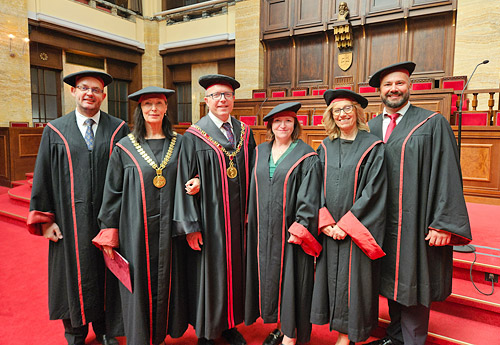
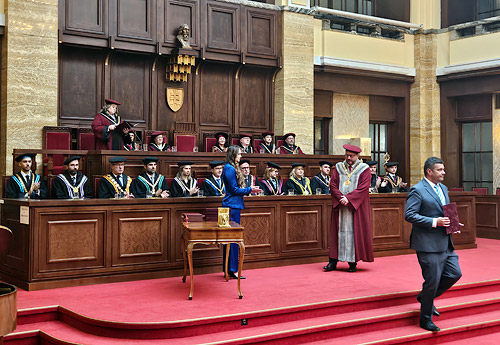
Comenius University was established in 1919, shortly after World War I. This was a time when many universities in Central and Eastern Europe were being founded, re-established, or reorganized. Building national education systems was very important during this period. Although some institutions had older historical roots, their official founding dates mark the beginning of modern universities. For example, Bratislava was once home to the Universitas Istropolitana (Academia Istropolitana), which existed briefly between 1465 and 1491. It was founded by Pope Paul II at the request of King Matthias Corvinus of Hungary.
The Faculty of Medicine of Comenius University was the first faculty to begin teaching in 1919. Since there were no professors in Bratislava at that time, the first teachers came mainly from Charles University in Prague.
For historical context, a short-lived medical faculty also existed in the 18th century at the University of Trnava, located about 50 km from Bratislava. It operated only between 1769 and 1777 before being moved to Buda (now part of Budapest). One notable figure from this period was Václav Trnka from Křovice (1739–1791, in Latin: Wenzel Trnka Krzowitz) (1739–1791), an anatomist and medical polymath. In view of current geographical layout, he was born and brought up in Bohemia (now Czech Republic), studied and graduated in Vienna, Austria, then finally was appointed as the first Professor of Anatomy of a newly established medical faculty in Trnava, Upper Hungary (now Slovakia). When the University in Trnava moved to Buda and later to Pest (today Budapest, Hungary), he was the first educator to introduce anatomy as a medical subject to be taught in a Hungarian medical school. He served three times as Dean of the Faculty of Medicine and was Rector of the Royal University of Budapest. During his life, he published 27 monographs on various medical topics such as malaria, diabetes, and rickets. Interestingly, although he was a professor of anatomy, he did not write a textbook on anatomy. He was also a talented musician and composer.
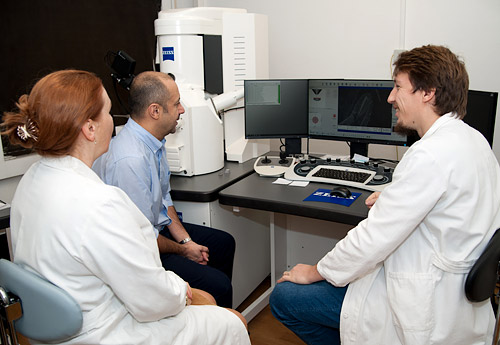
Shortly before the establishment of Comenius University, the Hungarian Elizabeth University was founded in Bratislava in 1912 with the permission of Emperor Franz Joseph I. It operated only partially during World War I and was closed in 1919 after the creation of Czechoslovakia. Most of its staff moved to Hungary and contributed to the foundation of the University of Pécs. Despite its short existence, the Faculty of Medicine built a strong research base, including the Institute of Pharmacology led by Professor Géza Mansfeld (1882–1950). Two future Nobel Prize laureates began their scientific careers there: Albert Szent-Györgyi (1893–1986), known for the discovery of vitamin C, research on muscle metabolism and cellular energy, and Carl Ferdinand Cori (1896–1984), who studied glycogen metabolism (the Cori cycle) together with his wife Gerty Cori. Professor Mansfeld himself was nominated twice for the Nobel Prize. The Institute of Pharmacology was located in the Aspermont Palace near the Medical Garden, which today houses the Dean’s Office of the Faculty of Medicine.
The foundation of Comenius University in 1919 was part of a broader effort to develop Slovak education and strengthen national identity in the newly formed Czechoslovak Republic. The goal was to provide high-quality higher education within Slovakia and support the development of science, culture, and national identity. At that time, German and Hungarian were commonly spoken in Bratislava due to its history within the Austria-Hungarian Monarchy and its proximity to Vienna and Budapest. The first professors therefore came mainly from the Czech Republic, especially from Charles University in Prague (founded in 1348), which explains the strong historical connection between the two institutions.
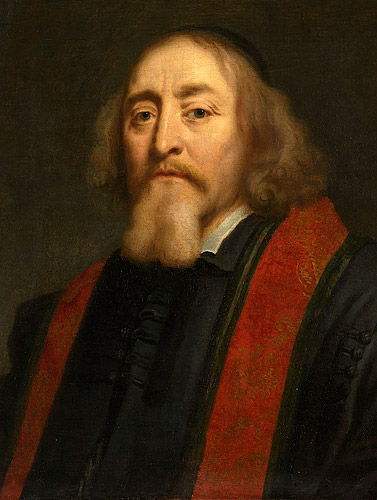
The university was named after John Amos Comenius (Jan Amos Komenský; 1592–1670), a 17th-century philosopher, teacher, and theologian, often called the father of modern education. He promoted teaching in native languages, the use of illustrated textbooks, gradual learning from simple to complex ideas, and education accessible to all. He also supported lifelong learning and experiential education focused on understanding rather than memorization.
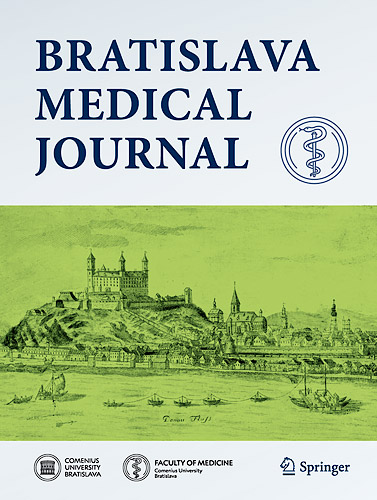
The first rector of Comenius University was Professor Kristián Hynek, a specialist in internal medicine and hematology. His name is associated with Hynek’s nuclear count, a parameter describing the average number of nuclear lobes in neutrophilic granulocytes, reflecting their stage of maturity. In 1921, he founded the Bratislava Medical Journal, now published by Springer Nature and recognized with an impact factor of 1.4.
The Faculty of Medicine began its activities in 1919. The Institute of Anatomy was established by Professor Antonín Frank (1892–1929), and the Institute of Histology and Embryology by Professor Zdeněk Frankenberger (1892–1966), both of whom previously worked at Charles University in Prague. Around 1938, Professor Vera Dantschakoff (1879–1950), a pioneering anatomist and stem cell researcher from the Russian Empire, briefly worked at the Institute. In 1908 she was the first woman in the Russian Empire to be appointed as a professor and she became a pioneer in stem cell research. She emigrated to the United States in 1915 where she was a leading exponent of the idea that all types of blood cell develop from a single type of cell. She later returned to Europe to continue with her research on the differentiation of tissues and organs in the process of embryonic development of animals, the formation of germ cells and the effect of hormones on the development of organisms. She discovered the role of stem cells in the laying of new tissues, the proof of the extragonadal origin of primary germ cells in birds and the development of methods for transplanting tissues into live embryos. She has been named ‘the mother of stem cells’ for her investigations of progenitors of cells. Her time in Bratislava was short and not well documented, as it coincided with a politically difficult period leading up to World War II, when many foreign (mostly Czech) professors were forced to leave Bratislava.
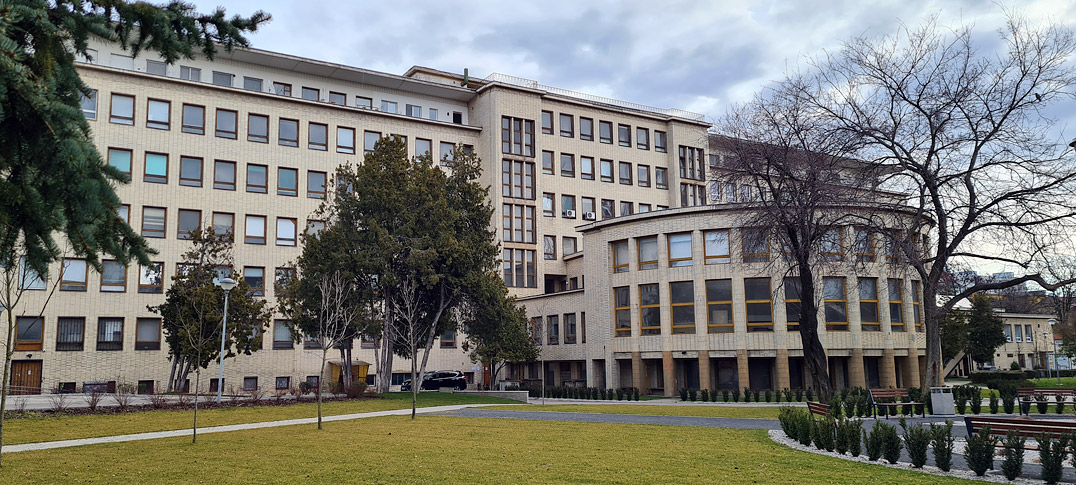
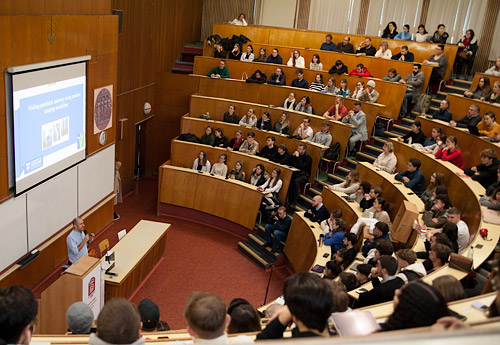
Today, the Faculty of Medicine includes 20 theoretical institutes and more than 60 clinical departments, employing nearly 1,000 scientists, medical doctors and teachers. It has more than 3,500 students in General Medicine, Dentistry, and PhD programs, with approximately one-third coming from abroad. The current Dean is Professor Juraj Payer, MD, PhD., FRCP, FEFIM, an internationally recognized expert in clinical endocrinology and osteology.
